Phytoresource ecologic reserve “El Gigante”
Article Sidebar
Main Article Content
Abstract
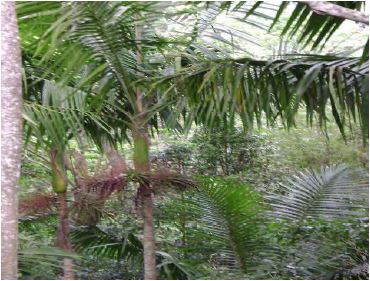
Those are studied about the utilitarian potentialities of the flora of the protected area “El Gigante”, in the Sierra Maestra, Cuba, different approaches were used for the determination of the potential and attributed uses, as well as consultations carried out near residents to the protected area and the workers of the conservation that work in the same one. We register 49 species with medicinal states, 52 with use potential as ornamental. Twenty two trees bees were sighted sucking of their floras what demonstrates that potentially they can be used for the production of honey, like food for the wild fauna 34 species they were detected, in the human feeding 10 species; are used in the category of other uses 58; considered as beautiful wood 23, many subjected to a limitless exploitation, such it is the case of Pinus maestrensis and Sideroxylon jubilla. The high potential is demonstrated in the flora resources that possess the area, those which managed correctly they can benefit the relationship community-protected area.
Downloads
Article Details

This work is licensed under a Creative Commons Attribution-NonCommercial 4.0 International License.
Those authors who have publications with this journal accept the following terms of the License Attribution-NonCommercial 4.0 International (CC BY-NC 4.0):
You are free to:
- Share — copy and redistribute the material in any medium or format
- Adapt — remix, transform, and build upon the material
The licensor cannot revoke these freedoms as long as you follow the license terms.
Under the following terms:
- Attribution — You must give appropriate credit, provide a link to the license, and indicate if changes were made. You may do so in any reasonable manner, but not in any way that suggests the licensor endorses you or your use.
- NonCommercial — You may not use the material for commercial purposes.
- No additional restrictions — You may not apply legal terms or technological measures that legally restrict others from doing anything the license permits.
The journal is not responsible for the opinions and concepts expressed in the works, they are the sole responsibility of the authors. The Editor, with the assistance of the Editorial Committee, reserves the right to suggest or request advisable or necessary modifications. They are accepted to publish original scientific papers, research results of interest that have not been published or sent to another journal for the same purpose.
The mention of trademarks of equipment, instruments or specific materials is for identification purposes, and there is no promotional commitment in relation to them, neither by the authors nor by the publisher.
How to Cite
References
Alain, Hno. 1964. Flora de Cuba. V. La Habana, Asoc. Est. Cienc. Biol. 313 p.
Acuña, J. 1970. Plantas melíferas de Cuba. Serie Agrícola (CU) 14: 1– 67
Catálogo de plantas silvestres comestibles. Cuidad de la Habana, Imprenta Central de las FAR. 371 p.
Fuentes, V. R. 1981. Recursos Cubanos de Plantas Medicinales. I. Revista Cubana de Farmacia (CU) 15(3): 146 – 163
Fuentes, V. R. y Manuel, G. 1997. Conozca las plantas medicinales. Ciudad de La Habana, Edit. Científico – Técnica. 244 p.
Murillo, T. M. 1983. Usos de los helechos en Sudamérica con especial referencia en Colombia. Bogotá: Universidad Nacional de Colombia. 156 p.
Ortega, Y. 1997. Prontuario de plantas medicinales. Ciudad de La Habana, Edit. CientíficoTécnica. 97 p.
Roig, J.T. 1974. Plantas medicinales, aromáticas o venenosas. La Habana, Edit. CientíficoTécnica. 938 p.