Empleo de agua tratada magnéticamente como riego en plántulas de Pinus tropicalis Morelet
Article Sidebar
Main Article Content
Abstract
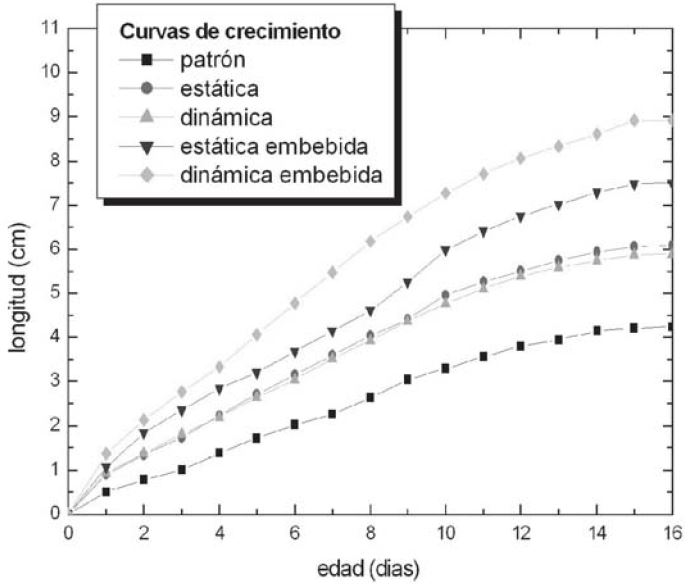
The growing process of the species Pinus tropicales Morelet is very slow. During the first years it has an herbal aspect with a slow growing patern; while a deep root system is been developed up to 10 times the height of the plant. This deep root system allows the plant to access the most humid layers of the soil. This characteristic is known as exploration and it is considered to be an adaptation of the species for dry season conditions, making this species of pine more competitive than the Pinus caribbean in this sense. The objective of this work is to apply magnetically treated water (MTW) (using 1200 Gauss magnets) to the seedlings of this species of pine by irrigating both kind of water magnetically and dynamically treated. For this purpose 4 treatments and a control samples were used. The seedling length was measured at the day 15th. Statistically, the data was analysed using a simple Anova and Duncan tests using a signification level of 5%. Results indicate the positive influence of the MTW in the vigour and in the growing, since the greatest lengths were of 10.75 cm, otherwise in the case of the control sample the greatest lengths were of 7 cm. This is a good clue of the positive effect of the MTW in this physiological aspect.
Downloads
Article Details

This work is licensed under a Creative Commons Attribution-NonCommercial 4.0 International License.
Those authors who have publications with this journal accept the following terms of the License Attribution-NonCommercial 4.0 International (CC BY-NC 4.0):
You are free to:
- Share — copy and redistribute the material in any medium or format
- Adapt — remix, transform, and build upon the material
The licensor cannot revoke these freedoms as long as you follow the license terms.
Under the following terms:
- Attribution — You must give appropriate credit, provide a link to the license, and indicate if changes were made. You may do so in any reasonable manner, but not in any way that suggests the licensor endorses you or your use.
- NonCommercial — You may not use the material for commercial purposes.
- No additional restrictions — You may not apply legal terms or technological measures that legally restrict others from doing anything the license permits.
The journal is not responsible for the opinions and concepts expressed in the works, they are the sole responsibility of the authors. The Editor, with the assistance of the Editorial Committee, reserves the right to suggest or request advisable or necessary modifications. They are accepted to publish original scientific papers, research results of interest that have not been published or sent to another journal for the same purpose.
The mention of trademarks of equipment, instruments or specific materials is for identification purposes, and there is no promotional commitment in relation to them, neither by the authors nor by the publisher.
How to Cite
References
Díaz, J. E.; E. Martínez; M. V. Carbonell: «Influencia del tratamiento magnético en la evaporación», revista Ingeniería de Recursos Naturales y del Ambiente, EIDENAR, http:// mafaldas.univalle. edu.co, 2004.
Díaz, J. E.: «Estudio de factores que afectan la evaporación del agua en el suelo» Tesis por el título de Doctor en Ciencias Agrícolas, Escuela Técnica Superior de Ingenieros Agrónomos, Universidad Politécnica de Madrid, 2001.
Carmenate, M. R.; R. D. Álvarez: «Influencia del agua tratada magnéticamente en la nutrición del cultivo del maíz en la etapa de plántula», Trabajo de Curso, ISAAC Fructuoso Rodríguez, 1992.
Pérez, J. R.: «Algunos temas sobre el tratamiento magnético del agua de riego de los cultivos»,
Forum de Magnetismo, ISAAC, La Habana, 1992.
Dayal, S.; R. P. Singh: «Effect Seed Exposure to Magnetic Field on the Height of Tomatoe Plans», Indian Jornal of Agricultural Sciences, 56 (6):483- 486, 1986.
Duarte, C. E.: «Ventajas del uso del tratamiento magnético del agua de riego en el cultivo del tomate en un suelo ferralítico rojo». Tesis por el título de Doctor en Ciencias Agrícolas, Instituto de Riego y Drenaje, La Habana, 2003.