Caracterización y distribución vertical de la fitomasa de raíces del bosque semideciduo en la Reserva de la Biosfera Península de Guanahacabibes, Cuba
Article Sidebar
Main Article Content
Abstract
The present work in semideciduos forest of
Reseve Biosphere Peninsula de
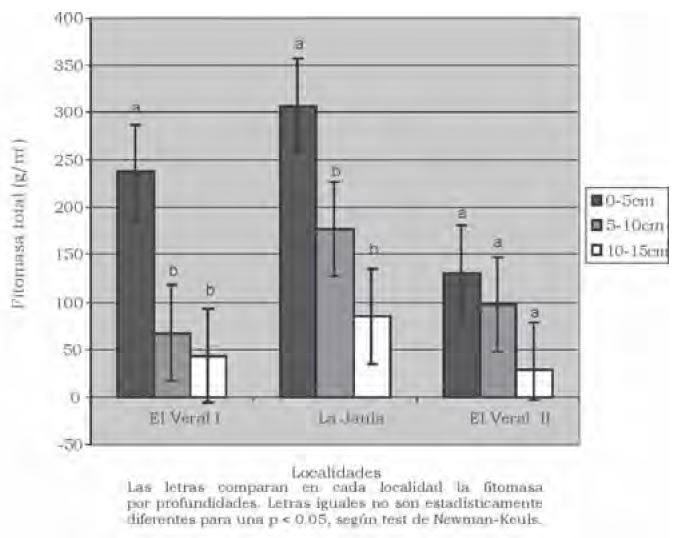
Guanahacabibes was realized characterize underground biomass and vertical distribution of ecosystems was the main purpose. To determine this monolith technique was used. The results allow to know the distribution and structure of roots in order classify functionally those ecosystems and establish the management structure for those forest types.
Downloads
Article Details

This work is licensed under a Creative Commons Attribution-NonCommercial 4.0 International License.
Those authors who have publications with this journal accept the following terms of the License Attribution-NonCommercial 4.0 International (CC BY-NC 4.0):
You are free to:
- Share — copy and redistribute the material in any medium or format
- Adapt — remix, transform, and build upon the material
The licensor cannot revoke these freedoms as long as you follow the license terms.
Under the following terms:
- Attribution — You must give appropriate credit, provide a link to the license, and indicate if changes were made. You may do so in any reasonable manner, but not in any way that suggests the licensor endorses you or your use.
- NonCommercial — You may not use the material for commercial purposes.
- No additional restrictions — You may not apply legal terms or technological measures that legally restrict others from doing anything the license permits.
The journal is not responsible for the opinions and concepts expressed in the works, they are the sole responsibility of the authors. The Editor, with the assistance of the Editorial Committee, reserves the right to suggest or request advisable or necessary modifications. They are accepted to publish original scientific papers, research results of interest that have not been published or sent to another journal for the same purpose.
The mention of trademarks of equipment, instruments or specific materials is for identification purposes, and there is no promotional commitment in relation to them, neither by the authors nor by the publisher.
How to Cite
References
Alfonso, J.: «Caracterización rizológica de los bosques semideciduos en la Reserva de la Biosfera Península de Guanahacabibes». Tesis en opción al grado académico de Máster en Ecología y Sistemática Aplicada, Mención Ecología, Delegación Territorial del CITMA, Pinar del Río, 1999.
Cuevas, E.: «Crecimiento de raíces finas y su relación con los procesos de descomposición de la materia orgánica y liberación de nutrientes en bosques de Alto Río Negro en el territorio Federal Amazona». Tesis de Ph.D., Instituto Venezolano de Investigaciones Científicas (IVIC), Centro de Estudios Avanzados, 1983.
Delgado, F.: «Estructura y diversidad de los bosques semideciduos de la Reserva de la Biosfera Península de Guanahacabibes». Tesis en opción al grado académico de Máster en Ecología y Sistemática Aplicada, Mención Ecología, Pinar del Río, Delegación Territorial del CITMA, 1999
Edwards, N. T.; W. E. Harris: «Carbon Cycling in a Mixed Deciduous Forest Floor», Ecology 58:431437, 1977.
Edwards, P, J.; P. J. Gubb: «Studies of Mineral Cycling in a Montarera in Forest in New Guinea. IV. Soil Characteristics and the Division of Mineral Elements Between the Vegetation and Soil», Journal of Ecology 70:649-666, 1982.
Fogel, R.; G. Hunt: «Contribution of Mycorrhizae and Soil Fungi to Nutrient Cycling in Douglas-Fir Ecosystem Can», Jour. For. Res. 13(2):219-232, 1983.
Golley, F. B.: «Nutrient Cycling and Nutrient Conservation», Tropical Rain Forest Ecosystem. A. Structure and Function, Elseiver Scientific Pub., Amsterdam, cap. 9, 1983, pp. 137-156.
Hernández, G.; R. A. Herrera: «Propiedades físicoquímicas del suelo y distribución de raicillas», Ecología de los bosques siempreverdes de la Sierra del Rosario, Cuba, Proyecto MAB no. 1, 1974-1987, cap. 24, IES, ACC, 1988, pp. 509-516.
Herrera, R. A.; M. Ruiz; E. Furrazola: «Biomasa de raíces en varios ecosistema boscosos de Cuba». Memorias del I Simposio de Botánica, t. V, La Habana, 1987a, pp. 108-126.
Herrera, R. A. et al. : «Génesis y significación ecológica de las esteras radicales en los bosques tropicales». Memorias del I Simposio de Botánica, t. V, La Habana, 1987b, pp. 63-89.
Jordan, C. F.; N. Stara: «Retención en la estera de raíces de un bosque pluvial amazónico», Acta Científica Venezolana 29(4):263-267,1978.
Lastre, L. O.; R. Francés: «El bosque tropical semideciduo del Parque La Güira, Cuba: I. Características de suelo y distribución de raíces», Reporte de Investigación del IES, no. 38:18, ACC, 1987.
Lopetegui, C.; O. Alfonso; A. SÁNCHEZ: «Características hidrometeorológicas de la península de Guanahacabibes», Centro Meteorológico, ACC, Pinar del Río, 1998.
Morales, E. A.: «Apuntes metodológicos para el estudio de raíces en plantaciones forestales y bosques naturales». Memorias del Simposio Internacional sobre posibilidades del manejo forestal sostenible en América Tropical, Bolfor, Cifor, IUFRO, 1997, pp. 80-91.
Rohlf, F.: «NTSYS-pc, Numerical Taxonomy and Multivariate Analysis System, Version 1.80», Exter Software, Applied biostatistics Inc., New York, 1993.
Sague, H.; L. Hernández: «Estructura del sistema radical de dos comunidades vegetales de suelos montañosos», Informe Científico-Técnico no. 41, Departamento de Ecología Forestal, ACC, La Habana, 1978, pp. 3-9.
Sierra, C. A: «Biomasa de raíces en bosques primarios y secundarios del área de influencia de la central hidroeléctrica PorceI». Trabajo de Grado, Universidad Nacional de Colombia, Sede Medellín, 2001.
Stark, N.: Nutrient Cycling 1, 1971.
Vandama, R.: «Estudio rizológico de Oxandra lanceolata (Sw.) Baill.», Ecología de los bosques siempre verdes de la Sierra del Rosario, Cuba, Proyecto MAB no. 1, 1974-1987, cap. 20, IES, ACC,1988, pp. 434-446.
Weaver, J. E.; F. CLEMENT: Ecología vegetal, Acme, Buenos Aires, 1926.