Residuos maderables. Aptitud de nueve especies latifolias de diferentes macizos montañosos para la fabricación de ecomateriales
Article Sidebar
Main Article Content
Abstract
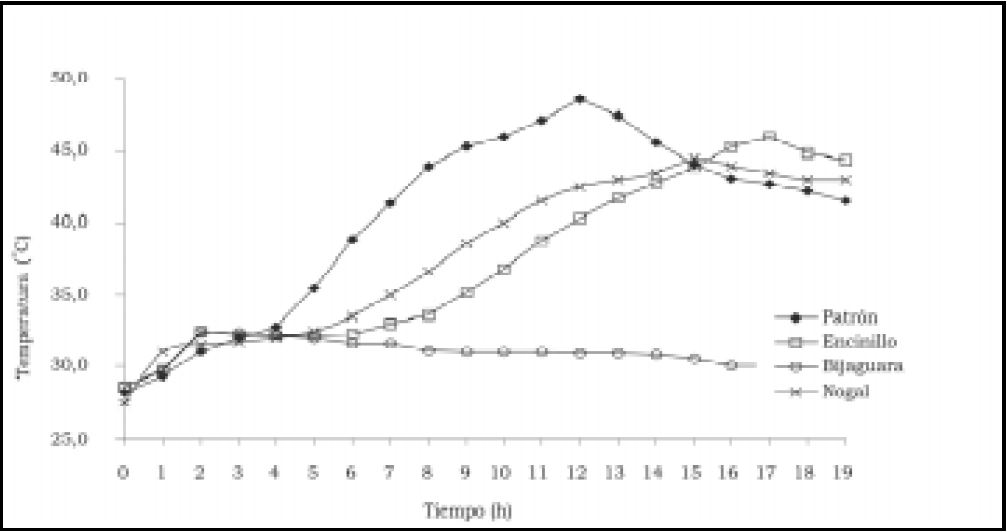
A study of the residuals of nine forest species is presented, coming from three solid mountainous of the country: Guamuaya represented in the species: Walnut of the country (Juglans insularis Griseb.), Laurocerasus occidentalis (Sw.) Roem. (Cuajaní male), Cordia collococca L. (ateje); Sierra Maestra represented for: Bijáguara (Colubrina arborescens (Mill.) Sarg., white sweet potato (Cinamomum parviflorum (Nees) Kosterm., Mahogany of the country (Swietenia mahagoni (L) Jacq., Guaímaro (Brosimum alicastrum Sw.) and guaguasí (Zuelania guidonia (Sw.) Britt et. Mill. and Guaniguanico represented by the species: Encinillo (Pithecellobium obovale (A. Rich.) Wr. The study has as objective to complete the characterization of these species by means of the evaluation of its compatibility with the cement Portland for its possible employment in the production of echo-materials. The method is based on the mensuration of the maximum temperature of hydrate of a test mixture and a witness. He/she was proven that 7 species were compatible (encinillo, walnut, guaímaro, ateje, guaguasí, cuajaní and white sweet potato) to present aptitude coefficients classified as good and very good, that which could be an element of interest in the matter balance prevails of the forest industry for the employment of the residuals.
Downloads
Article Details

This work is licensed under a Creative Commons Attribution-NonCommercial 4.0 International License.
Those authors who have publications with this journal accept the following terms of the License Attribution-NonCommercial 4.0 International (CC BY-NC 4.0):
You are free to:
- Share — copy and redistribute the material in any medium or format
- Adapt — remix, transform, and build upon the material
The licensor cannot revoke these freedoms as long as you follow the license terms.
Under the following terms:
- Attribution — You must give appropriate credit, provide a link to the license, and indicate if changes were made. You may do so in any reasonable manner, but not in any way that suggests the licensor endorses you or your use.
- NonCommercial — You may not use the material for commercial purposes.
- No additional restrictions — You may not apply legal terms or technological measures that legally restrict others from doing anything the license permits.
The journal is not responsible for the opinions and concepts expressed in the works, they are the sole responsibility of the authors. The Editor, with the assistance of the Editorial Committee, reserves the right to suggest or request advisable or necessary modifications. They are accepted to publish original scientific papers, research results of interest that have not been published or sent to another journal for the same purpose.
The mention of trademarks of equipment, instruments or specific materials is for identification purposes, and there is no promotional commitment in relation to them, neither by the authors nor by the publisher.
How to Cite
References
Hoftrand, A. D.; A. A. Moslemi; J. F. Garcia: «Curing Characteristics of Wood Particles from Nine Northern Rocky Moountain Species Mixed with Portland Cement», Forest Products Journal 43 (2):57-61, 1984.
Lingfei, M. et al.: «Fabricación de aglomerados de bambú y cemento. II. Efecto de los aditivos sobre las características de la hidratación de las mezclas de bambú y cemento», revista Makuzai Gakkaishi 43(9):753-762, 1997.
Manzanares Katia et al.: «Aptitud del material de raleo de tres especies forestales para formar aglomerados con cemento», Revista Forestal Baracoa 21 (1):59,73, 1991.
Manso, R.: «Ética y respeto ambiental. ¿Un camino en el bosque o un bosque en el camino?», revista Energía y Tú, 2001, pp. 28-30.
Moslemi, A. A.; T. Lim: «Compatibility of Sourtherm Hardwood with Portland Cement», Forest Products Journal 34 (78):22-26, 1984.
Sanderman, W.; R. Köler: «Studies on Mineral Bouded Wood Material. IV. A. Short Test of Aptitudes of
Wood Forestal Cement Bouded Materials», Holzforshung 18 (12):53-59, 1964.
Velázquez, Digna; Katia Manzanares; María A. Guyat: «Compatibilidad de especies maderables de la empresa La Palma para formar aglomerados con cemento», Revista Forestal Baracoa 1:79-86, 2004.
Vilela, E.; B. Dupasquier: «Determinación del coeficiente de aptitud de un grupo de maderas para su posible aplicación en la fabricación de tableros de papilla de madera-cemento», Revista Forestal Venezolana 11(16):75-84, 1968.
Weatherwax, R. C.; H. Tarkow: «Effect of Wood on Setting of Portland Cement», Forest Products Journal 14 (2):567-570, 1964.