Impact of hurricanes on Bambusa vulgaris Schrader ex Wendland in western Cuba
Article Sidebar
Main Article Content
Abstract
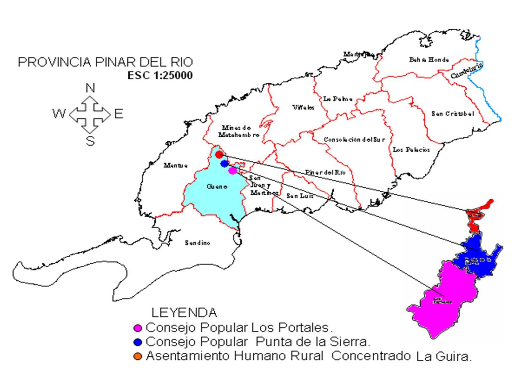
Hurricanes pose a significant threat to bamboo plantations in tropical regions due to their capacity to cause mechanical damage and reduce the productivity of these species. This study was conducted to determine the impact of hurricanes on Bambusa vulgaris at three sites in the province of Pinar del Río, Cuba. Seedlings were evaluated in 10 × 10 m² plots through an inventory in 2002 and a new sampling in 2005, following Hurricanes Isidore and Ivan. Biovolume was quantified, and analysis of variance was applied to compare the values before and after the cyclones. The results showed a significant reduction in biovolume at all three sites after the hurricanes, with winds reaching speeds exceeding 117 km/h and causing culm breakage and twisting. Furthermore, poor silvicultural management was identified, characterized by inadequate cutting and a high proportion of dry culms, which increases vulnerability to pests. It is concluded that hurricanes negatively affect the biovolume of *B. vulgaris*, and that the conservation status of the plantations is fair, with poorly developed plant structures. Although the species shows some adaptive capacity, its effective recovery depends on the implementation of post-impact management practices.
Downloads
Article Details

This work is licensed under a Creative Commons Attribution-NonCommercial 4.0 International License.
Those authors who have publications with this journal accept the following terms of the License Attribution-NonCommercial 4.0 International (CC BY-NC 4.0):
You are free to:
- Share — copy and redistribute the material in any medium or format
- Adapt — remix, transform, and build upon the material
The licensor cannot revoke these freedoms as long as you follow the license terms.
Under the following terms:
- Attribution — You must give appropriate credit, provide a link to the license, and indicate if changes were made. You may do so in any reasonable manner, but not in any way that suggests the licensor endorses you or your use.
- NonCommercial — You may not use the material for commercial purposes.
- No additional restrictions — You may not apply legal terms or technological measures that legally restrict others from doing anything the license permits.
The journal is not responsible for the opinions and concepts expressed in the works, they are the sole responsibility of the authors. The Editor, with the assistance of the Editorial Committee, reserves the right to suggest or request advisable or necessary modifications. They are accepted to publish original scientific papers, research results of interest that have not been published or sent to another journal for the same purpose.
The mention of trademarks of equipment, instruments or specific materials is for identification purposes, and there is no promotional commitment in relation to them, neither by the authors nor by the publisher.
How to Cite
References
Álvarez, R. A. 1995. Estadística Multivariada y no paramétrica con SPSS. Ediciones Díaz De Santos, S.A. Juan Bravo, Madrid, España. 28006 p. ISBN: 978-84-7978-180-4.
Álvarez, M; Miguel B.; Jorge L.; Juan M. M. y Félix A. A. 2003. Tecnología para el manejo sostenible de Bambusa vulgaris Schrad. En: Memorias del Primer Taller Nacional del Bambú. Programa “Desarrollo de alternativas agroecológicas para el uso del bambú en Cuba”. Asociación Cubana de Trabajadores Agropecuarios y Forestales. p 39-51.
Álvarez, M; Miguel B.; Jorge L. y Juan M. M. 2004. «Manual técnico del Bambú», versión electrónica. Instituto de Investigaciones Forestales. Ciudad de La Habana. 24p.
Betancourt, M.; Miguel A.; Ihosvany C. y Juan M. M. 2008. Reforestación con Bambú en Cuba. Memorias del taller Bambú biomasa, Bayamo, Granma. Versión electrónica. p14.
Betancourt, M. 2009. Comunicación personal. Instituto de Investigaciones Forestales, Cuba.
Calderón, S.; Gayoso, J.; Guerra, J.; Schelegel, B. 2002. Inventarios forestales para contabilidad de carbono. FONDEF, INFOR, Universidad Austral de Chile. Chile. 30 p. Falta DOI o URL
Calero, A. 1978. Técnicas de muestreo. Estadística. Editorial Pueblo y educación. Ciudad de La Habana, Cuba. 184 p.
Camino, R. 1997. Monitoreo forestal en Nicaragua. Revista Forestal Centroaméricana, No 25, CATIE, Turialba, Costa Rica. 21p.
Catasús, L. 2003. Estudio de los Bambúes arborescentes cultivados en Cuba. Asociación Cubana de Trabajadores Agropecuarios y Forestales. 56p.
Centella, A.; J. Llanes y L. Paz. 2001. República de Cuba, Primera Comunicación Nacional a la Convención Marcos de las Naciones Unidas sobre Cambio Climático. (Ed.) INSMET Instituto de Meteorología. Cuba. p.3-118.
Cordero, Elsa M. 2004. Resultados de inventario forestal realizado en las plantaciones de Bambusa vulgaris schrad var. vulgaris en el municipio de Guane, perteneciente a la Empresa Forestal Integral Macurije de la provincia Pinar del Río. Revista Forestal Baracoa. Instituto de Investigaciones Forestales Vol. 23 (2), Ciudad de La Habana, Cuba. p.33-37.
DMPF, 2002. Dirección Municipal de Planificación Física. Guane, Pinar del Río.
FAO. 2000. Actes de l’ atelier sous-règional sur les statistiques forestiéres et perspectives pour le secteur forestier en Afrique/FOSA sous région ECOWAS. Yamoussoukro, Côte d’Ivoire, 13-18 de diciembre de 1999. FAO, Roma.
Francis, John k. 1993. Bambusa vulgaris Schrad ex Wendl. Bambú común. Gramíneas. Familia de las gramíneas. Bambusoideae. Subfamilia del bambú. Servicio Forestal del USDA, Instituto Internacional de Silvicultura Tropical. 6 p. (SO-ITF-SM; 65).
García, Q. Y. 2006. Estrategia de conservación intraespecífica para Pinus caribaea Morelet var. caribaea Barret y Golfari. Tesis en opción al grado científico de Doctor en Ciencias Ecológicas. Programa de Doctorado cooperado Universidad de Pinar del Río/Universidad de Alicante. Cuba.
Hernández, A.; J. M. Pérez, D. Bosch, L. Rivero, E. Camacho y J. M. Ruiz 1999. Nueva versión de clasificación genética de los suelos de Cuba. Instituto de Suelos, MINAG, Ciudad de La Habana, Cuba. 64 p.
Lamprecht, H. 1990. Silvicultura en los trópicos. Cooperación Técnica. República Federal de Alemania. 335 p.
Louman, B; Quirós, D y Nilson, M. 2001. Silvicultura de bosques latifoliados húmedos con énfasis en América Central. CATIE. Turrialba, Costa Rica. 265 p.
Sáenz, G. y Finegan, B. 2000. Monitoreo de la regeneración natural con fines de manejo forestal. Manejo forestal tropical. No. 15. 8 p.
SEF. 2005. Dinámica Forestal, Guane, Pinar del Río. Delegación Territorial del Ministerio de la Agricultura. Pinar del Río, Cuba.
Wong, K.M. 1995. The bamboos of Peninsular Malaysia, Malaysia, Forest Research Institute Malaysia. No 41, 200p. ISBN 9839592408.